
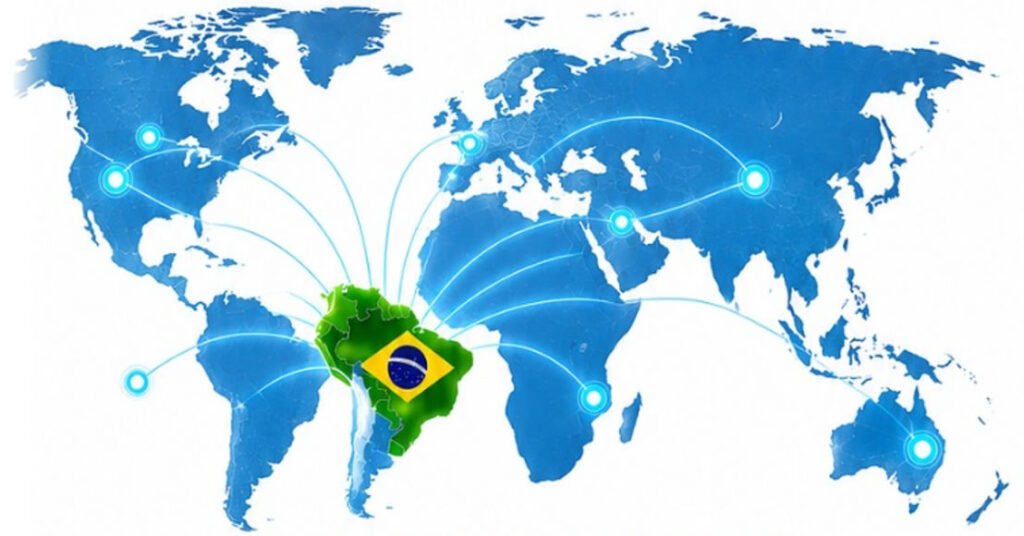
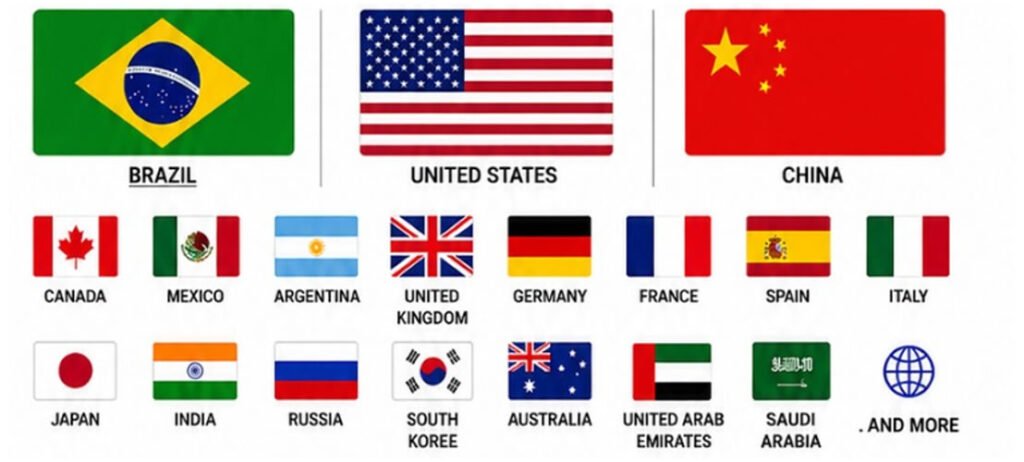

Strict compliance is the entry ticket to any credible Brazil market strategy. For foreign investors, private equity firms, procurement teams, and M&A buyers, the first mistake is treating Brazil as a simple growth story. It is not. It is a high-opportunity jurisdiction with layered regulatory, legal, tax, and operational complexity that rewards disciplined acquirers and punishes assumption-driven capital. The best deals are rarely visible on the surface; they emerge only after deep market research, granular corporate verification, and a hard look at the barriers that keep weaker competitors out.
Compliance First
Any serious investment thesis in Brazil begins with due diligence, not valuation. The market contains scale, liquidity, and sector depth, but those advantages can be neutralized quickly by undisclosed liabilities, weak legal standing, or false counterparty claims. A CNPJ validation is not a formality; it is the first filter against commercial fraud, inactive entities, shell companies, and misrepresented ownership structures. Buyers that skip this step often discover too late that the target’s legal identity, tax status, or corporate registry data does not match the transaction narrative.
That is why professional investors now treat Brazil as a jurisdiction where corporate verification determines whether a deal advances or dies. The question is not whether the company looks attractive on paper. The question is whether the company exists in good standing, whether its officers are properly registered, whether its filings align with economic reality, and whether the asset base is free from hidden encumbrances. Without that discipline, foreign direct investment becomes a liability exercise instead of a value creation strategy.
Where the Hidden Opportunities Really Sit
The strongest Brazil investment opportunities are often embedded in areas that require patience, local intelligence, and operational rigor. Mid-market industrial assets, regional distributors, family-owned suppliers, logistics operators, agribusiness service providers, healthcare platforms, and specialty manufacturing businesses frequently exhibit solid fundamentals but remain undercapitalized, fragmented, or poorly structured for institutional scale. This creates a classic risk-adjusted entry point for private equity firms and strategic buyers willing to do the work.
However, these opportunities are rarely auction-ready. They are concealed behind informality, weak governance, incomplete records, and non-standardized reporting. That opacity can be a source of alpha, but only if the investor has the capability to dissect the business from the inside out. Competitive intelligence becomes essential: who are the local champions, where are the bottlenecks, what pricing power exists, and which competitors are overleveraged or exposed to regulatory pressure? In Brazil, market entry barriers often protect margins, but only for buyers who understand them.
- Fragmented markets can support roll-up strategies, but only if customer concentration and supplier dependency are mapped early.
- Regional logistics constraints create defensible niches for operators with strong last-mile and distribution capabilities.
- Family-owned businesses may offer attractive valuation entry points, yet succession risk and governance gaps must be tested immediately.
- Publicly visible demand often masks private-sector distress, meaning the best acquisitions come from sellers under capital pressure rather than from formal market leaders.
Market Entry Barriers That Protect Deals
Brazil’s complexity is often described as a deterrent, but for sophisticated capital it can function as a moat. Licensing, tax administration, labor compliance, municipal variation, environmental oversight, and sector-specific rules all raise the cost of entry for inexperienced players. This creates room for disciplined acquirers to secure durable positions, particularly in sectors where local knowledge is decisive. The same barriers that slow new entrants can accelerate returns for investors who possess the legal, financial, and operational infrastructure to navigate them.
Still, those barriers are only valuable if they are measurable. A buyer must assess how much of the target’s margin is protected by real structural advantages versus temporary inefficiencies. That means testing land rights, reviewing permits, validating real estate titles, and conducting litigation checks across municipal, state, and federal records. In Brazil, a clean revenue line does not guarantee a clean balance sheet. Hidden labor claims, tax disputes, and environmental liabilities can survive acquisition and materially alter post-close economics.
For procurement teams, this diligence is equally critical. Supplier onboarding in Brazil requires more than a price comparison. It requires fraud risk assessment, financial resilience testing, beneficial ownership review, and field-level verification of operational capacity. The cheapest vendor can become the most expensive failure if the counterparty lacks compliance controls or cannot deliver consistently under contract.
Competitive Intelligence Is the Real Differentiator
The most profitable Brazil investment opportunities are frequently uncovered through superior intelligence, not better branding. Investors who understand market share shifts, distributor networks, import substitution trends, competitive positioning, and credit stress can identify mispriced assets before others even recognize the signal. This is especially true in sectors affected by exchange-rate volatility, infrastructure costs, or policy change.
Deep market research should cover customer concentration, pricing discipline, supplier concentration, and regulatory exposure. It should also identify whether the target depends on one founder, one license, one municipality, or one major client. Those dependencies can hide in plain sight and create post-acquisition fragility. A well-run diligence process will pressure-test revenue quality, assess recasting adjustments, and confirm whether EBITDA is repeatable or artificially inflated by accounting choices.
In practice, the best acquirers build a multi-layer view of the market before making an offer. They compare legal data against commercial reality, track local court activity, review ownership changes, and assess whether the business can scale without triggering compliance failures. That approach often reveals businesses that appear ordinary but are strategically valuable because they sit inside an under-served niche or control a hard-to-replicate local network.
Real Estate Title and Asset Integrity
Real estate remains a major source of hidden risk and hidden value in Brazil. Industrial sites, warehouses, retail locations, and agricultural properties can materially affect transaction pricing. Yet asset ownership is frequently misunderstood, especially where inherited land, informal occupation, easements, or historical title issues exist. A rigorous real estate analysis should examine title chain integrity, encumbrances, zoning compliance, environmental restrictions, and any disputes that could impair use or resale.
For M&A buyers, this is not merely a property issue. It is a transaction risk issue. If the operating company relies on a disputed site, the acquisition may inherit a legal problem that disrupts cash flow or forces capex after closing. Conversely, a target with clean land rights, stable permits, and strategically located assets may deserve a valuation premium because the real estate itself strengthens the operating moat.
That is why foreign investors should never separate asset due diligence from corporate due diligence. In Brazil, the two are often intertwined, and both must be verified with precision.
What Serious Buyers Must Test Before Bidding
The following checks should be treated as mandatory, not optional:
- CNPJ validation to confirm legal existence, registration status, and tax regularity.
- Litigation checks to identify labor, tax, commercial, environmental, and shareholder disputes.
- Real estate analysis to verify title, occupancy, permit validity, and encumbrances.
- Fraud risk assessment to detect fake suppliers, false invoices, beneficial owner concealment, and transactional inconsistencies.
- Sanctions and reputation screening to protect against anti-corruption and cross-border compliance failures.
- Operational site visits to verify that the business matches the data room and management presentation.
Each of these steps narrows uncertainty and improves pricing discipline. More importantly, they reduce the likelihood of acquiring a business that looks investable but is structurally impaired.
Capital Deployment Requires Local Ground Truth
Brazil rewards investors who can separate narrative from evidence. A compelling pitch deck is not enough. Strong transaction outcomes depend on local ground truth: how a business actually invoices, who really controls the customer relationship, what the tax posture looks like in practice, and whether the workforce can be retained after a change of control. These are not secondary questions; they are central to the investment decision.
Private equity firms pursuing platform acquisitions should especially focus on synergy realism. Cross-selling assumptions, procurement savings, and regional expansion plans all depend on accurate baseline data. If the target’s internal controls are weak or its reporting is unreliable, synergy projections can be overstated and integration costs underestimated. The same caution applies to foreign strategic buyers seeking distribution, manufacturing, or sourcing advantages in Brazil.
Accordingly, market entry should be structured around verified intelligence, not optimism. That means using legal counsel, forensic accounting support, local operating advisors, and structured verification tools before capital is committed. Brazil can produce exceptional returns, but only when the investment committee understands exactly what is being bought, what is being assumed, and what could fail after closing.
Risk Management Determines the Outcome
The most attractive Brazil investment opportunities are usually the ones that require the most work. That is the point. Opaque markets create inefficiencies, and inefficiencies create opportunity for investors with discipline, patience, and local insight. But the same opacity can destroy value if buyers ignore corporate verification, underestimate litigation exposure, or fail to validate counterparties and assets at the source.
The professional standard is clear: proper due diligence is non-negotiable. Whether the mandate involves acquisition, supplier onboarding, market entry, or portfolio expansion, the investor who wins in Brazil is the investor who verifies everything, prices risk correctly, and manages exposure with rigor from the first screen to the final closing.