

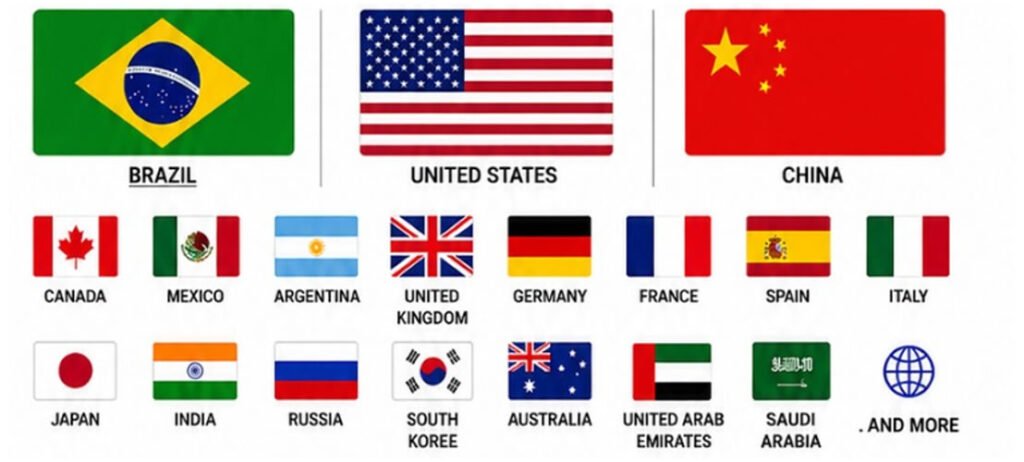

Brazil Emerging Market Investments
Brazil remains one of the most strategically relevant destinations for foreign direct investment, private equity deployment, and cross-border M&A activity in Latin America. Its scale, sector diversity, and deep consumer base continue to attract global capital seeking growth, consolidation opportunities, and portfolio diversification. Yet the most attractive deals are often the ones that require the most rigorous scrutiny. In Brazil, the value proposition is inseparable from the risk profile, and that reality makes due diligence non-negotiable for any serious investor.
For global private equity firms, procurement teams, and foreign buyers, the central issue is not only valuation, but also whether the target company, supplier, asset, or counterparty is exposed to hidden liabilities that can erode returns after closing. This is where litigation mapping, debt screening, and corporate verification become essential. A Brazil investment thesis should be built not merely on market potential, but on a disciplined process of fraud risk assessment, CNPJ validation, and legal exposure review before capital is committed.
Why Brazil Requires a Deeper Risk Lens
Brazil’s corporate environment offers sophisticated sectors, robust industrial capacity, and extensive infrastructure and consumer markets, but it also presents a complex litigation and regulatory landscape. Labor disputes, tax controversies, environmental claims, contractual breaches, and compliance issues can surface long after a transaction closes. For cross-border investors, the challenge is amplified by fragmented records, evolving court databases, and localized legal structures that may not be immediately visible in a standard commercial review.
That is why Brazil emerging market investments demand a broader approach than financial analysis alone. The most successful investors treat legal verification as a core investment filter. They look at whether the target has recurring lawsuits, outstanding tax assessments, enforcement actions, property encumbrances, or signs of shell-company behavior. They also assess whether the ownership chain is transparent and whether the company’s public representations align with registry data and litigation records.
This is especially important in asset acquisitions, joint ventures, distributor appointments, and supplier onboarding. A transaction that appears clean from a commercial standpoint may carry hidden legal liabilities that create reputational harm, delayed integration, or direct financial loss. Proper screening identifies those issues before they become post-closing disputes.
Litigation Mapping as a Strategic Investment Tool
Litigation mapping is one of the most effective methods for understanding a Brazilian target’s true risk posture. Instead of reviewing only a handful of known cases, investors should map the full litigation footprint across federal, state, labor, and tax courts. This helps reveal whether disputes are isolated events or part of a systemic pattern.
For private equity buyers and multinational acquirers, litigation mapping should cover:
- Labor claims involving severance, contractor misclassification, overtime exposure, and employee benefit disputes
- Tax litigation tied to federal, state, and municipal obligations, including assessments and penalties
- Commercial disputes involving suppliers, customers, franchisees, and strategic partners
- Environmental and regulatory actions that may affect permits, operations, or asset value
- Insolvency and enforcement proceedings that signal balance sheet stress or creditor pressure
By identifying litigation concentration, parties can distinguish between manageable legal friction and a pattern of recurring conduct that may indicate governance weaknesses, aggressive accounting, or poor compliance culture. This is particularly valuable in Brazil, where claims can remain active for years and may follow the operating entity, the controlling shareholders, or specific assets depending on the structure of the deal.
Debt Screening and Hidden Liability Detection
Equally important is debt screening, which helps buyers determine whether a target carries financial obligations that do not always appear in a basic corporate profile. In Brazil, liabilities may include unpaid taxes, court-ordered debt, vendor exposure, employee claims, lease obligations, collateralized borrowings, and contingent liabilities connected to past operations.
Debt analysis should not be limited to a balance sheet review. It should extend to public records, enforcement filings, creditor actions, and signs of financial distress. Investors should also examine whether the company has assets pledged to lenders, whether guarantees have been issued by affiliates or shareholders, and whether debt covenants may be triggered by a change of control.
When debt screening is integrated with litigation mapping, the result is a much clearer view of post-acquisition risk. A target with moderate debt may still be acceptable if liabilities are well documented and ring-fenced. By contrast, a low-debt company with large undisclosed contingencies can create significant value leakage after closing. This is why corporate verification must be designed to uncover the full spectrum of exposure, not just visible borrowings.
CNPJ Validation and Corporate Verification
Any serious review of a Brazilian counterparty begins with CNPJ validation. The CNPJ serves as a foundational identifier for corporate verification, but validating the number alone is not enough. Investors must confirm that the registered name, status, activity code, headquarters, shareholders, and branch structure match the information provided in deal documents and commercial representations.
This step is critical in fraud prevention. In some cases, entities present themselves as established commercial organizations while operating through inconsistent registration data, inactive statuses, or mirrored trade names. Validating the CNPJ helps confirm whether the company is active, whether it is properly constituted, and whether the entity entering the transaction is the same one reflected in court and registry records.
For procurement teams and overseas buyers, CNPJ validation is also a supplier integrity measure. It reduces the risk of onboarding a fraudulent vendor, a dormant entity, or a company with undisclosed legal issues. When combined with ownership verification, sanctions review, and litigation screening, it becomes a powerful control against misrepresentation and payment diversion.
Real Estate Analysis and Asset Based Risk
For transactions involving factories, distribution centers, offices, land, or collateralized assets, real estate analysis is indispensable. In Brazil, property ownership, land title quality, zoning status, environmental restrictions, and lien exposure can materially affect enterprise value. A target may appear well capitalized, yet its principal operational assets may be vulnerable to encumbrances, title disputes, or regulatory limitations.
Real estate due diligence should verify ownership chain, occupancy rights, mortgages, easements, judicial liens, and any legal actions that could impair transferability or use. Investors should also assess whether the asset supports the intended business model and whether local approvals, permits, or environmental licenses are in place. For industrial and logistics transactions, these findings can influence both valuation and integration planning.
Because property disputes can become expensive and time-consuming, real estate analysis should be conducted alongside litigation mapping. This dual review helps identify whether the asset has already been involved in disputes or whether there are pending claims that could affect closing certainty. In a market where operational continuity matters, asset-level verification is a direct defense against hidden liability.
Fraud Risk Assessment in Cross Border Transactions
Brazilian market entry strategies often rely on local intermediaries, brokers, distributors, minority partners, and acquisition targets with layered ownership structures. These arrangements create commercial opportunity, but they also increase exposure to fraud risk. Common warning signs include inconsistent financial statements, sudden changes in ownership, opaque corporate groups, related-party transactions, unusual payment instructions, and unverifiable references.
A formal fraud risk assessment should examine not only the target’s legal standing, but also behavioral and transactional red flags. Investors should ask whether the company has a credible operating history, whether management can substantiate its claims, and whether contracts, invoices, and delivery records align with actual commercial activity. Where cross-border payments are involved, the ability to independently verify bank details, counterparties, and beneficial ownership is essential.
Fraud prevention is not a narrow compliance task. It is a value preservation function. If a buyer acquires a business based on inflated revenue, fabricated counterparties, or undisclosed conflicts, the resulting impairment can outweigh the original transaction premium. Accordingly, sophisticated investors integrate fraud screening into both pre-signing and pre-closing workstreams.
How Investors Can Build a Safer Entry Strategy
The most effective Brazil entry strategies use layered verification. Financial modeling should be paired with legal intelligence, registry review, and adverse media analysis. Contractual protections such as representations, warranties, indemnities, escrow mechanisms, and closing conditions are useful, but they are not substitutes for upfront diligence. They are most effective when supported by a complete understanding of the counterparty’s legal and financial footprint.
Investors should prioritize:
- Litigation mapping across all major court systems
- Debt screening for tax, labor, vendor, and enforcement exposure
- CNPJ validation and ownership confirmation
- Real estate analysis for asset and title risk
- Fraud risk assessment for counterparty and payment integrity
- Corporate verification to confirm identity, authority, and operational legitimacy
When these measures are executed early, investors can negotiate better pricing, structure stronger protections, and avoid closing on transactions that carry unquantified downside. That is particularly important in Brazil, where local legal complexity can magnify even apparently minor gaps in documentation or entity control.
Conclusion
Brazil’s investment case remains compelling for global capital, but disciplined market entry depends on the ability to identify and neutralize hidden liabilities before they compromise returns. For private equity firms, foreign investors, procurement leaders, and M&A buyers, the most reliable advantage comes from rigorous due diligence built around litigation mapping, debt screening, CNPJ validation, real estate analysis, and fraud risk assessment. In Brazilian cross-border transactions, risk management is not a back-office formality; it is the foundation of deal certainty, capital protection, and long-term value creation.