

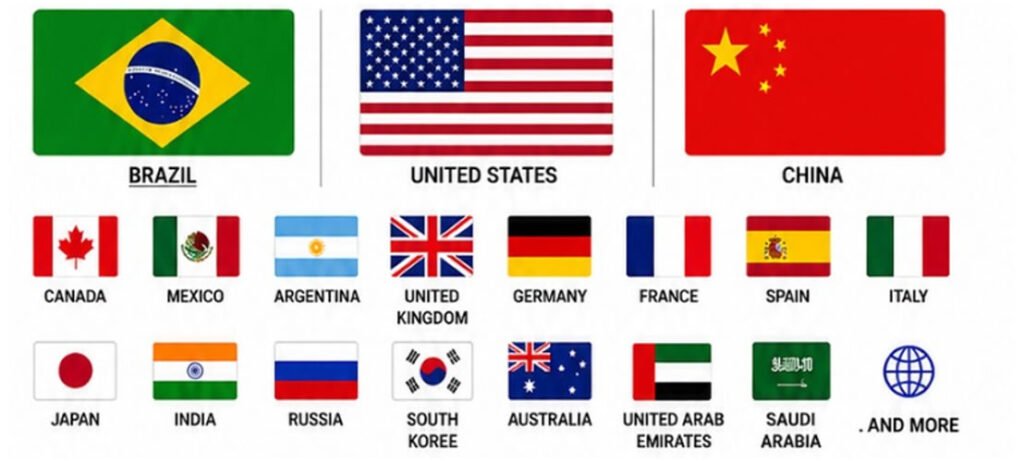

Brazil’s agribusiness sector continues to attract global capital because it combines scale, export depth, and exposure to food, feed, energy, and land-use demand. For private equity firms, foreign investors, procurement teams, and M&A buyers, the opportunity is not simply to acquire production assets; it is to uncover value hidden inside complex operating structures, fragmented ownership chains, and export-ready supply networks. A well-structured acquisition can provide immediate access to soy, corn, sugar, coffee, meat, bioinputs, or downstream logistics. Yet the highest-return deals are often the ones where tax compliance and corporate structure are understood with precision before the first offer is made.
Strategic market opportunity in Brazilian agribusiness
The Brazilian agribusiness landscape offers a rare combination of domestic consumption resilience and global trade exposure. Companies with strong origination, storage, processing, and distribution capabilities can become strategically valuable assets for buyers seeking regional scale or commodity supply security. However, the same factors that create upside also create complexity: a business may look efficient at the operating level while carrying hidden liabilities in its legal entity stack, landholding structure, tax filings, or supplier relationships. This is why acquisition strategy in Brazil must begin with deep market research, not asset-level enthusiasm.
For an M&A buyer, the real question is not whether agribusiness is attractive, but where the operational moat is genuine and where the risk is embedded. Processing margins, export channels, climate exposure, and logistics access matter, but so do the less visible issues: whether the target’s corporate structure is clean, whether there are unresolved tax contingencies, and whether the company’s real estate and rural land assets are fully defensible. Proper due diligence is therefore non-negotiable, because only rigorous verification can separate durable cash flow from contingent exposure.
Why tax compliance drives valuation
Brazilian tax rules can materially affect post-closing economics. Agribusiness businesses often operate across multiple jurisdictions, benefit from sector-specific incentives, or rely on complex indirect tax credits tied to logistics, processing, and exports. That creates room for both optimization and error. A target can appear profitable on paper while carrying hidden exposure from misapplied credits, unpaid obligations, inconsistent bookkeeping, or historical disputes with tax authorities. These risks directly influence enterprise value and should be quantified before any binding offer.
Buyers should test whether the company’s tax position is stable at both the federal and state levels. Special attention should be paid to ICMS, PIS, COFINS, payroll tax obligations, and transfer-pricing sensitivity where relevant. Even if a target has not received formal assessments, weak controls may still indicate future exposure. In an acquisition context, tax uncertainty is not just a compliance issue; it is a pricing issue, a financing issue, and a covenant issue. A disciplined buyer will seek evidence that filing history, credit claims, and contingency reserves align with the company’s actual operating footprint.
Corporate structure risk and hidden ownership exposure
In Brazilian agribusiness acquisitions, the legal entity structure often matters as much as the physical assets. Many targets operate through holding companies, special-purpose entities, rural property vehicles, or family-controlled shareholding arrangements. Some structures are efficient; others are designed to isolate liabilities, obscure control relationships, or preserve legacy arrangements that no longer match commercial reality. The acquirer must map the full ownership chain and determine who controls voting rights, land assets, supplier contracts, and strategic decision-making.
One of the most common mistakes is assuming that a clean operating company implies a clean group structure. In practice, hidden guarantees, shareholder loans, related-party transactions, and undocumented side agreements can transfer risk into the acquirer’s balance sheet after closing. This is where corporate verification becomes essential. A serious buyer should validate the target’s CNPJ records, confirm corporate registrations, check beneficial ownership links, and compare statutory documents against actual control. This process helps expose inconsistencies that could affect deal certainty, lender confidence, or post-acquisition integration.
Due diligence that reveals opportunity not just risk
Effective due diligence in Brazil should be designed to uncover both threats and underpriced upside. A target with modest margins may still be attractive if tax credits are recoverable, land titles are stronger than expected, or litigation exposure is narrower than market rumors suggest. Conversely, a premium-quality asset may deserve a discount if compliance systems are weak or if ownership rights are less secure than advertised. The analytical objective is to determine the truth beneath the management presentation.
- CNPJ validation to confirm legal existence, status, and registration consistency across all operating entities
- Litigation checks covering labor, tax, environmental, civil, and regulatory disputes that could affect cash flow or asset transferability
- Real estate analysis to verify title chains, rural property registration, boundary integrity, and enforceability of land rights
- Fraud risk assessment to detect invoice irregularities, related-party leakage, procurement manipulation, or inventory distortion
- Tax compliance review to identify unpaid obligations, inconsistent filings, and potential contingent liabilities
These checks are not administrative formalities. They are value-discovery tools. In agribusiness, where cash conversion cycles can be seasonal and asset values are often anchored in land, inventory, and export contracts, a weak diligence process can destroy the deal thesis. By contrast, a disciplined review can reveal hidden bargaining power and justify more informed pricing.
Real estate and land title risk in agribusiness acquisitions
Land is often the core strategic asset in Brazilian agribusiness, particularly for producers, integrators, and processors with captive supply or expansion potential. Yet rural real estate in Brazil can carry layered legal complexity. Buyers need to understand whether land is fully titled, whether access rights are protected, whether environmental restrictions apply, and whether the property is properly registered and free from encumbrances. If these issues are not resolved early, the acquirer may inherit operational disruption or financing constraints.
Real estate analysis should also extend to land-use compliance, zoning, environmental licensing, and any restrictions that may apply to foreign-controlled structures. For international investors, land exposure may trigger additional legal scrutiny, especially where control rights, operational leases, or indirect ownership models are involved. A target may possess productive acreage, but if title is disputed or registration is weak, the economic value of that acreage is materially impaired. This is why the legal quality of the acreage must be assessed alongside agronomic productivity.
Litigation and counterparty risk in supply chains
Agribusiness in Brazil is rarely a standalone business. It depends on growers, transporters, cooperatives, storage operators, and export counterparties. Each relationship introduces legal and credit risk. Litigation checks should therefore be extended beyond the target company to principal suppliers, tenant operators, and key commercial partners where feasible. If the company’s revenue concentration is high, any legal disruption at the counterparty level can quickly become an EBITDA problem.
Procurement teams, in particular, should evaluate whether the target’s purchasing practices are exposed to recurring disputes, undocumented rebates, or compliance gaps in vendor onboarding. A company that sources raw material through a broad network of counterparties may be profitable, but also vulnerable to fraud, misclassification, or contract enforceability issues. Acquirers should verify whether supplier contracts are standardized, whether anti-corruption controls exist, and whether commercial relationships have been stress-tested under adverse conditions.
How sophisticated buyers capture hidden value
The most successful buyers in Brazilian agribusiness do not simply screen for red flags; they use deep market research to identify mispriced strengths. For instance, a target with weak brand visibility may still possess superior logistics infrastructure, export licenses, or scalable storage capacity. A company with complex corporate history may still be strategically valuable if legacy liabilities are ring-fenced and compliance gaps can be remediated. In these situations, the differential between headline risk and actual risk creates room for value creation.
To capture that upside, the buyer must build a risk-adjusted diligence model that links legal findings to financial outcomes. Tax exposures should be translated into cash cost scenarios. Land title issues should be translated into operational or financing discounts. Litigation should be measured by probability, duration, and settlement value. Fraud indicators should be assessed in terms of inventory loss, working capital distortion, or reputational damage. This is how disciplined investors convert diligence into competitive advantage.
Conclusion
An acquisition in Brazilian agribusiness can deliver durable strategic value, but only when the buyer treats tax compliance, corporate verification, and asset validation as central drivers of price and structure. The strongest returns come from recognizing that hidden opportunity exists where market intelligence is deepest and where legal and financial risk has been mapped with precision. For global investors and M&A buyers, the decisive advantage lies in disciplined verification, because in Brazil’s agribusiness market, risk management is the foundation of defensible value creation.