

Strict compliance is not optional when capital enters Brazilian mining. For private equity firms, foreign investors, procurement teams, and M&A buyers, the first mistake is often assuming that a registered target is a verified target. In practice, mining assets in Brazil can sit inside layered corporate structures, incomplete public records, disputed land titles, labor claims, tax exposures, and environmental liabilities that are hidden until closing. That is why proper due diligence is non-negotiable. The real risk is not only asset quality; it is the possibility that the ownership chain is weak, the operators are under litigation, or the company exists primarily as a shell around liabilities rather than production.
Why mining transactions in Brazil demand enhanced scrutiny
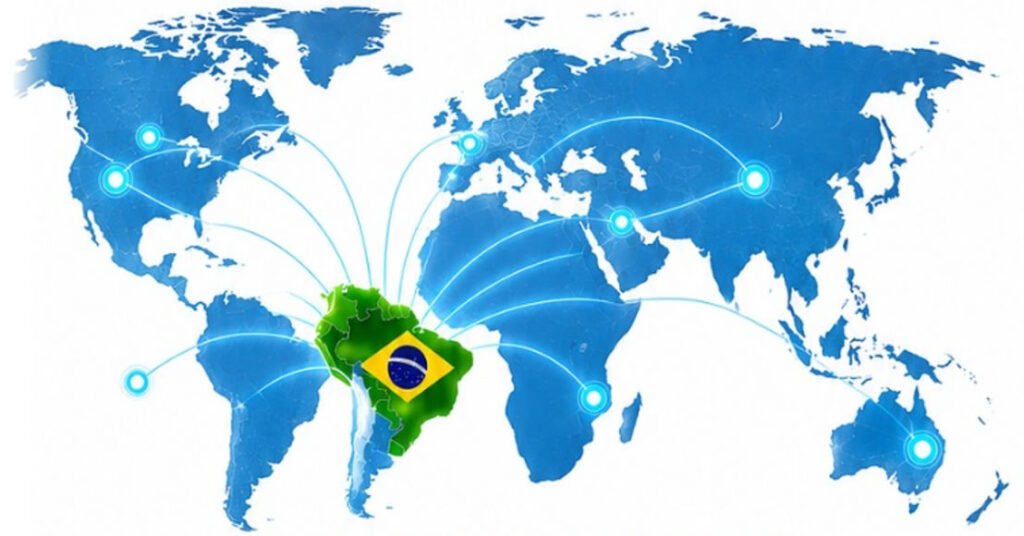
Mining investment in Brazil attracts global capital because of reserve potential, export corridors, and strategic minerals. Yet the same market also presents an elevated profile of legal liability, labor exposure, and record fragmentation. Corporate information is often dispersed across federal, state, and municipal registries. Land records may not align with operational claims. Environmental authorizations may be incomplete or challenged. A target that looks operational on paper can still conceal serious defects in title, permitting, or governance.
For that reason, investors should approach every Brazilian mining acquisition as a forensic exercise. The question is not merely whether the company mines; it is whether the company owns what it says it owns, hires in compliance with labor law, and can survive post-close scrutiny from regulators, counterparties, and local communities. In mining, hidden defects can quickly turn into balance sheet shocks.
Fragmented public records and shell company structures
One of the most persistent hazards in Brazilian mining deals is the use of layered entities that obscure beneficial ownership. Shell companies may appear legitimate because they hold a valid CNPJ, maintain basic filings, and sign contracts through authorized officers. However, corporate form alone does not prove operational substance. Investors must determine whether the entity has real assets, real liabilities, and real decision-makers.
At minimum, a robust review should include:
- CNPJ validation to confirm registration status, corporate name consistency, tax standing, and activity classification
- Shareholder and control-chain analysis to identify ultimate beneficial owners and hidden related-party links
- Litigation checks across federal, state, labor, tax, and environmental courts
- Fraud risk assessment to flag fictitious vendors, anomalous invoices, or suspicious asset transfers
- Real estate analysis to confirm mine-site tenure, easements, access rights, and encumbrances
These steps are not administrative formalities. They are the foundation of capital protection in a market where corporate opacity can be used to mask litigation histories or transfer liabilities into newly created vehicles. A shell structure connected to mineral rights, equipment leases, or land access can become a trap for a buyer that relied on superficial diligence.
Labor liabilities can survive the transaction
Mining in Brazil carries substantial labor risk because operations often involve contractors, transport providers, maintenance crews, and site-based employees working in hazardous conditions. This environment creates exposure to wage claims, overtime disputes, contractor misclassification, collective bargaining conflicts, and occupational safety allegations. In some cases, the liability profile extends beyond the operating company to parent entities, buyers, and affiliated participants if the transaction is structured carelessly.
Labour due diligence should therefore go far beyond headcount and payroll review. Investors need to test historical labor claims, examine contractor supervision practices, verify compensation records, review accident reports, and identify any pattern of violations linked to forced labor allegations, inadequate safety systems, or union disputes. In a mining context, one unresolved claim can accelerate into reputational damage, regulatory action, and unexpected provisioning requirements after closing.
For procurement teams, labor due diligence also matters when selecting subcontractors and logistics providers. A low-cost supplier can become a high-cost exposure if it has a history of labor noncompliance, falsified staffing records, or litigation tied to unsafe working conditions. In Brazil, supply chain discipline is part of the legal risk perimeter.
Land title and real estate analysis are decisive
Mining deals are frequently undermined by weak land documentation rather than by geology. A mineral concession does not automatically eliminate disputes over surface access, river rights, neighboring parcels, or easements. Private equity firms and M&A buyers should insist on a detailed real estate analysis that reconciles registry data, occupancy claims, lease agreements, and site coordinates.
Key questions include whether the target has valid possession of the operational area, whether the land is free from liens or adverse claims, and whether there are unresolved boundary disputes. If land access depends on a chain of private agreements, the buyer must confirm that each link is enforceable and not susceptible to cancellation, challenge, or succession issues. Where the project depends on third-party landowners, contract duration and termination rights deserve the same attention as mineral grade.
In Brazil, land defects can delay operations, impair financing, and reduce exit value. A legal title problem does not stay local; it migrates into the purchase price, insurance program, and future buyer diligence. That is why land verification is not a supporting task. It is a central investment control.
Environmental and permitting exposure can overwhelm valuation
Mining assets also carry environmental liabilities that can remain invisible until a regulator asks for historical records. Permits may be incomplete, expired, transferred improperly, or inconsistent with the actual footprint of the operation. Tailings management, water use, waste disposal, and reclamation obligations can all create substantial contingent liabilities.
Investors should verify every critical authorization, cross-check permit conditions against actual operations, and assess whether there are prior notices of violation, remediation orders, or administrative proceedings. If a target has changed extraction methods, processing routes, or expansion plans without proper approvals, the legal exposure can extend well beyond fines. It can affect the validity of the entire transaction thesis.
To protect capital, diligence teams should treat environmental review as a value issue, not merely a regulatory checklist. The cost of remediation, permitting delays, and possible stoppages must be reflected in the purchase structure, earnout mechanics, and indemnity package.
How buyers should structure risk controls
Serious investors do not rely on one source or one advisor. They triangulate corporate verification, asset verification, and legal risk assessment before committing capital. A disciplined process should include:
- Corporate verification to confirm the target’s existence, authority, and ownership structure
- Comprehensive litigation searches to identify civil, labor, tax, and enforcement matters
- Fraud screening to detect false documents, nominee shareholders, or related-party circularity
- Real estate and registry analysis for land tenure, access rights, and encumbrances
- Contract review across royalties, offtake, logistics, equipment, and contractor agreements
Where red flags remain unresolved, buyers should consider price adjustments, escrow structures, survival covenants, and closing conditions tied to documentary cleanup. In some cases, the correct decision is not to proceed. Capital preservation sometimes means refusing a transaction that cannot be made transparent enough to underwrite.
A hard market for weak verification
Mining investment in Brazil rewards discipline and punishes assumptions. The combination of fragmented public records, shell companies, labor liabilities, and contested assets means that surface-level screening is inadequate. A valid registration number, a polished data room, or a local sponsor’s reputation cannot substitute for documented, independent, and repeated verification.
For global private equity firms and foreign investors, the standard must be clear: if the target cannot withstand CNPJ validation, litigation checks, real estate analysis, and fraud risk assessment, it is not ready for acquisition. The market does not forgive weak diligence, and post-closing remediation is usually more expensive than walking away before signing. In Brazilian mining, the most defensible capital decision is the one grounded in rigorous risk management, verified legal standing, and absolute transactional transparency.