

Debunking the assumption that market size equals deal safety
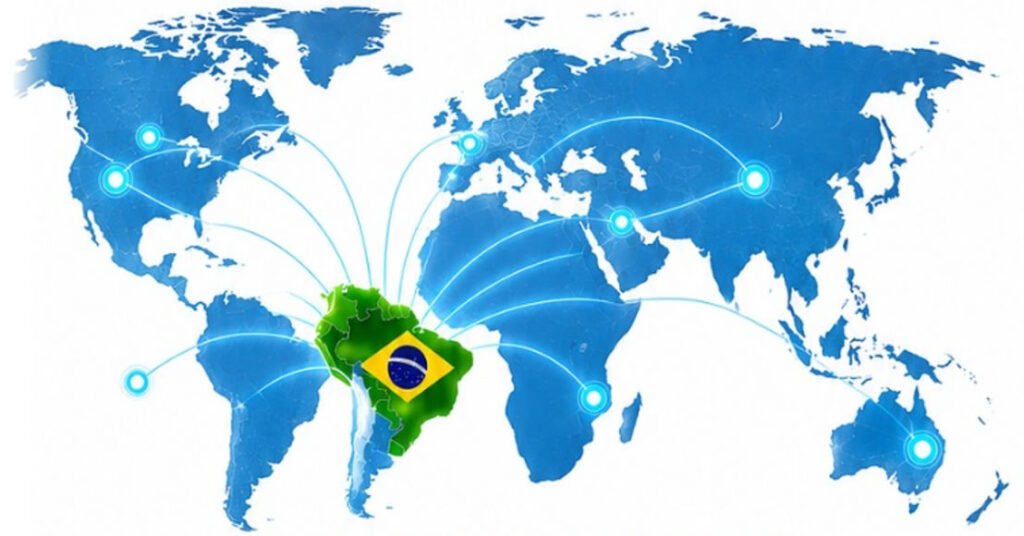
A common mistake among foreign investors is assuming that Brazil’s scale automatically translates into controllable risk. It does not. A large domestic market can support strong valuation multiples, but it can also conceal fragmented public records, layered ownership structures, labor exposure, and third-party liability that only become visible after acquisition signatures are exchanged. For private equity firms, procurement leaders, and M&A buyers, the real question is not whether Brazil offers growth. The question is which sectors can generate durable returns without exposing capital to hidden legal, tax, or operational problems.
That distinction matters because profitable sectors in Brazil are rarely the ones with the simplest headlines. The most attractive opportunities often sit in industries where revenues are resilient, but where corporate verification, CNPJ validation, litigation screening, and fraud risk assessment are essential before any binding commitment. In practice, proper due diligence is not a back-office exercise; it is the first line of capital protection.
Sectors that combine profitability with identifiable risk controls
Brazil continues to attract investment across several high-performing sectors, but each requires a disciplined view of legal and labor liabilities. The strongest sectors for investors are those where valuation upside can be measured against observable compliance data, asset quality, and counterparty integrity.
Among the most consistently attractive sectors are agribusiness, logistics, energy transition, healthcare, technology services, and industrial outsourcing. These sectors benefit from structural demand, export momentum, demographic needs, or recurring service models. However, their investment appeal depends on more than cash flow. They must also be screened for labor claims, tax contingencies, environmental exposure, and hidden ownership interests that could affect control or recovery.
Agribusiness as a high cash flow sector with ownership and land risks
Agribusiness remains one of Brazil’s most profitable sectors for investors due to export competitiveness, productive land capacity, and strong global demand for commodities and food processing. Yet it is also one of the most sensitive sectors from a real estate analysis perspective. Land title disputes, tenancy conflicts, environmental restrictions, and chain-of-custody issues can undermine asset value quickly.
For M&A buyers targeting farms, processors, storage facilities, or trading entities, property records and land registry verification are non-negotiable. A target company may report attractive revenues while controlling assets through incomplete title structures, informal leases, or litigation-heavy holdings. Buyers should also examine labor liabilities linked to seasonal employment, outsourced harvest operations, and contractor classification, since these matters can generate severe post-closing exposure.
The sector remains compelling because it offers scale and export resilience, but only when the investor verifies ownership, environmental permissions, and the integrity of counterparties along the supply chain.
Logistics and infrastructure with recurring demand but complex counterparties
Logistics is another profitable sector for foreign capital because Brazil’s domestic transport network is large, fragmented, and constantly in need of modernization. Warehousing, port services, road transport, and last-mile distribution can generate dependable revenues. The strategic value is clear: businesses that can move goods efficiently in a geographically broad market tend to enjoy pricing power and long-term contracts.
Still, logistics is a sector where hidden liabilities often travel through subcontractors. Procurement teams and strategic buyers should not limit reviews to the target entity. They should evaluate fleet ownership, vendor registrations, driver labor practices, insurance coverage, and third-party compliance. The weakest point is frequently not the operating company itself, but the network of shell suppliers that support it.
Here, fraud risk assessment is essential. A weak vendor chain can expose the buyer to phantom invoices, tax irregularities, and claims of joint liability. Litigation checks should extend to transport accidents, labor disputes, customs issues, and permit challenges. For investors seeking stable cash generation, logistics can be attractive, yet only if the counterparty map is cleaned before the transaction closes.
Energy transition and utilities with contract driven returns
Brazil’s energy transition sectors, including renewable power, distributed generation, grid services, and related equipment supply, are particularly attractive because they often rely on long-term contracts and regulated or semi-regulated revenue models. These features support financing structures familiar to global private equity and infrastructure investors.
Even so, utility and energy assets need comprehensive legal diligence. Project companies may hold permits through special-purpose vehicles, making CNPJ validation and ownership tracing critical. Buyers should confirm whether development rights are clean, whether environmental licenses are current, and whether there are hidden disputes among sponsors, landowners, or equipment providers. Labor exposure also matters in construction, maintenance, and outsourced installation work, where accident claims and contractor misclassification can create enterprise-level risk.
Energy assets can be highly profitable because they are often supported by steady demand and long-duration contracts. The safest ones are those with clean documentation, verified project history, and no unresolved claims in the public record.
Healthcare and life sciences where recurring demand offsets compliance intensity
Healthcare is one of the most resilient sectors in Brazil because demand is driven by demographics, formal employment benefits, and recurring medical needs. Hospitals, diagnostics, outpatient networks, and specialized services can produce strong EBITDA when professionally operated. For investors, the sector offers scale, consolidation potential, and cross-selling opportunities.
Yet healthcare is also encumbered by regulatory oversight, labor intensity, and reputation risk. Teams evaluating acquisitions should inspect clinical liability history, supplier contracts, billing practices, and employment litigation. Simultaneously, a deep review of licenses, facility leases, and real estate use rights is needed because operational continuity depends on property and zoning compliance.
In this sector, due diligence must be structured around both financial performance and legal continuity. A profitable healthcare platform can quickly lose value if a chain of clinics is tied to unresolved lawsuits, unlicensed expansions, or shell-owned service providers that blur accountability.
Technology services and B2B outsourcing with acquisition upside
Technology services, software implementation, and B2B outsourcing stand out because they can create high margins with relatively low fixed assets. They are often attractive to foreign buyers seeking scalable platforms, recurring revenue, and strategic entry into the Brazilian mid-market.
However, technology targets require a different kind of scrutiny. The main risk may not be physical assets but data ownership, intellectual property, employment classification, and customer concentration. Many service firms rely on contractors, partner resellers, and white-label arrangements that can obscure control. This is where corporate verification becomes decisive.
Investors should review the company’s CNPJ status, historical filings, beneficial ownership, litigation profile, and tax footprint. They should also evaluate whether the target uses third-party billing entities or subsidiaries that function as shells for invoice routing. If a model depends on recurring digital contracts, the buyer must confirm that revenue is genuine, enforceable, and not inflated through related-party arrangements.
Industrial outsourcing and manufacturing with margin discipline and labor exposure
Industrial outsourcing, packaging, specialty manufacturing, and contract production can be profitable in Brazil when positioned around efficiency, regional proximity, and export readiness. These businesses often appeal to M&A buyers because they convert operational discipline into margin stability.
Yet here the main challenge is labor liability. Manufacturing targets may present a thin veneer of operational strength while carrying a history of union disputes, safety claims, overtime exposure, and contingent obligations attached to outsourced workers. In addition, the asset base may include leased industrial properties that require a careful real estate analysis before closing.
For procurement teams and corporate acquirers, supplier integrity is equally important. Industrial revenue can be distorted by related-party vendors or shell logistics providers. A robust fraud review should reconcile invoices, shipment records, tax documents, and payroll records so the buyer understands whether margins reflect reality or accounting friction.
Due diligence as the operating system for capital protection
Across all sectors, the practical rule is the same: due diligence in Brazil must be treated as a transaction prerequisite, not a post-signing formality. Sophisticated investors do not simply review financial statements; they verify the legal existence of the target, map beneficial ownership, screen litigation, analyze property rights, and test for labor and tax contingencies.
An effective review program should include:
-
CNPJ validation to confirm registration status, branch structure, and operating legitimacy
-
Litigation checks covering labor, tax, environmental, civil, and regulatory disputes
-
Real estate analysis for title quality, lease validity, zoning, and encumbrances
-
Fraud risk assessment to detect shell companies, circular billing, fake vendors, and related-party distortions
-
Counterparty and supplier screening to identify hidden control points and reputational exposure
This framework is especially important in Brazil because public records can be uneven, data can be fragmented across jurisdictions, and corporate structures can obscure who actually controls assets or liabilities. A target may look efficient on the surface while sitting on years of unreported claims. The cost of missing that fact can erase the upside of an otherwise strong sector thesis.
A disciplined path to profitable entry
Brazil remains a compelling destination for foreign investment, but profitable entry depends on precision, not optimism. The sectors with the best balance of return and investability are those with recurring demand, measurable assets, and enough transparency to support effective verification. Agribusiness, logistics, energy transition, healthcare, technology services, and industrial outsourcing each offer upside, yet each also requires tailored review of legal, labor, tax, and ownership risk.
For global private equity firms, procurement teams, and M&A buyers, the competitive advantage comes from protecting capital before it is deployed. That means treating due diligence as a core investment function, insisting on clean corporate verification, and refusing any transaction where shell-company risk, labor exposure, or hidden real estate defects remain unresolved. In the Brazilian market, disciplined risk management is not a support activity; it is the basis of successful deployment and capital preservation.